





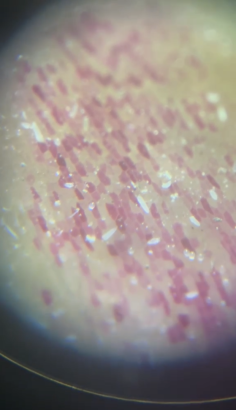
Holland Bulb Market Combats Tulip Gall Mite with the CATT Method
Innovative protection of flower bulbs without traditional chemical treatments
A healthy flower bulb is the foundation of a strong and healthy plant. That is why Holland Bulb Market focuses not only on the quality of the varieties we supply, but also on protecting plant material against diseases and pests.
One of the most serious threats to tulip bulbs is the tulip gall mite, also known as Aceria tulipae. This microscopic mite is almost impossible to see with the naked eye, yet an infestation can cause serious problems during storage and in the subsequent cultivation process.
To reduce this risk effectively, Holland Bulb Market uses the modern CATT method: Controlled Atmosphere Temperature Treatment.
What is tulip gall mite?
Tulip gall mite is a very small mite that can hide between the scales of a flower bulb. It feeds on plant tissue and can weaken the bulb, disrupt growth and cause damage to the developing plant.
The pest can also spread further during storage. An additional risk is that tulip gall mite can transmit Tulip Virus X, commonly known as TVX. Controlling the mite is therefore extremely important for the health of tulip bulbs and for maintaining quality throughout the entire production chain.
Traditionally, tulip gall mite was mainly controlled using chemical treatments. However, these solutions have limitations. Their use may increase the risk of other problems, including infections caused by Fusarium. In addition, the number of available crop protection products is gradually decreasing.
For this reason, the flower bulb industry is looking for methods that are effective, preserve bulb quality and place less pressure on the environment.
How does the CATT method work?
CATT stands for Controlled Atmosphere Temperature Treatment. This means that the bulbs are treated using a carefully controlled combination of temperature and atmospheric composition.
During treatment, the flower bulbs are placed in a specially designed, sealed chamber. Several factors are precisely controlled inside this chamber:
- temperature;
- oxygen level;
- carbon dioxide level;
- treatment duration.
The combination of a carefully selected temperature, a very low oxygen level and an increased concentration of carbon dioxide creates conditions in which tulip gall mite cannot survive.
At the same time, the process must be carried out with great precision to preserve the quality, vitality and growing strength of the flower bulbs.
CATT is therefore more than simply heating flower bulbs. It is the combination of temperature, atmosphere and treatment time that makes the method particularly effective.
Why is CATT so effective?
Research by Wageningen University & Research has shown that treating tulip bulbs for 48 hours at a temperature of 25°C, combined with a low oxygen level and a high carbon dioxide concentration, is highly effective against tulip gall mite.
In laboratory studies, this method resulted in 100% mortality among the mites tested. During larger-scale trials, only a very small number of mites survived. This number was even lower than after the chemical treatment used for comparison.
When the correct treatment parameters were applied, no negative effect on the flower bulbs was observed.
As a result, CATT is considered one of the most effective available methods for controlling tulip gall mite in tulip bulbs.
The main advantages of CATT
Very high effectiveness
The controlled combination of temperature, low oxygen and increased carbon dioxide has a much stronger effect on the mite than changing only one of these factors.
Treatment of the entire batch
The treatment takes place inside a sealed chamber. This allows the controlled conditions to be applied evenly to the entire batch of flower bulbs.
This is an important advantage compared with liquid treatments, which may be less effective in reaching difficult areas between the bulb scales.
No chemical residues
CATT uses controlled temperature and atmospheric conditions rather than traditional chemical treatments against mites.
As a result, no residues from chemical mite-control products remain on the flower bulbs after treatment.
Lower risk of resistance
Chemical products usually target specific biological processes within a pest. Repeated use may therefore lead to the development of resistance.
CATT works through a combination of physical environmental conditions. This greatly reduces the risk of resistance developing.
Supporting more sustainable production
The technology helps reduce dependence on chemical crop protection products.
CATT therefore supports the development of cleaner, more sustainable and future-proof methods for protecting plant material.
Precision is essential
Effective CATT treatment requires professional equipment, sealed chambers and advanced monitoring systems.
Temperature, atmospheric composition and treatment duration must be monitored continuously. The correct settings depend on the type of plant material, the condition of the bulbs and the purpose of the treatment.
If the treatment is too mild, its effectiveness may be insufficient. On the other hand, an excessively high temperature or incorrect treatment duration may affect bulb quality.
CATT is therefore not a simple heat treatment. It is a professional and carefully controlled process that requires specialist knowledge, suitable equipment and continuous monitoring.
We invest in healthy plant material
Holland Bulb Market sees CATT as an important part of modern flower bulb protection.
With this technology, we can help limit the risk of tulip gall mite spreading, reduce the use of traditional chemical treatments and further support the quality of the plant material supplied to our customers.
For our customers, this means greater confidence when purchasing flower bulbs intended for resale, professional cultivation or flower production.
No single treatment can replace proper quality control, hygiene, correct storage and careful handling of flower bulbs. However, CATT is a particularly powerful tool within a broader system for protecting healthy plant material.
Modern technology for the future of the flower bulb industry
As the availability of chemical crop protection products continues to decline, the flower bulb industry needs effective alternatives.
CATT demonstrates that innovation and sustainability can go hand in hand with high product quality and reliable production.
By investing in modern technology, Holland Bulb Market aims not only to respond to today’s challenges, but also to prepare for the future requirements of the market.
Healthier flower bulbs, reduced use of chemical treatments and greater control over the entire treatment process: that is why Holland Bulb Market chooses CATT.
.png?1785490104)


.png?1785490714)